.svg)

Understanding blood pressure readings is crucial for maintaining heart health and preventing cardiovascular diseases. This comprehensive guide will explain what systolic and diastolic blood pressure are, how they are measured, and why they are important indicators of your overall health. We’ll also discuss the factors that affect blood pressure, how to manage it, and where to get the best care, such as at the best hospital in Ranchi.
Introduction
Blood pressure is more than just numbers your doctor tells you during a check-up; it’s a critical measure of your heart’s health and overall circulatory system efficiency. Regular monitoring can help detect cardiovascular issues early, making understanding these readings essential.
Understanding Blood Pressure
Blood pressure is the force exerted by circulating blood against the walls of the body’s arteries, the major blood vessels in the body. It is one of the vital signs, along with respiratory rate, heart rate, oxygen saturation, and body temperature, that doctors frequently check.
The Basics of Systolic and Diastolic Blood Pressure

Blood pressure is expressed as two numbers, such as 120/80 mm Hg. Each number holds important information about your heart health:
1. Systolic Blood Pressure:
Systolic pressure is the first, or top, number in a blood pressure reading. It measures the pressure in your arteries when your heart beats or contracts, pushing blood through the blood vessels. This number can range significantly based on your activity level, emotional state, and overall health. For instance, it may rise during exercise or stress and lower during rest.
2. Diastolic Blood Pressure:
Diastolic pressure, the second or bottom number, measures the pressure in your arteries when your heart is at rest between beats. This number is crucial as it indicates the minimum pressure to which your arteries are subjected. Maintaining a lower diastolic blood pressure is believed to protect against the risks associated with heart disease.
How Blood Pressure is Measured
A device called a sphygmomanometer is used to measure blood pressure. This can be done using a manual meter with a stethoscope and a pump or an automatic machine. Regardless of the method, it’s essential that the measurement is done correctly to avoid false readings:
- Sit in a relaxed position with the arm at heart level.
- Wrap the cuff snugly around the upper arm.
- Inflate the cuff and gradually release it while listening for heart sounds or observing the readings on an automatic device.
Normal, Elevated, and High Blood Pressure Levels
Blood pressure levels are categorized as follows:
- Normal: Systolic less than 120 and diastolic less than 80 mm Hg.
- Elevated: Systolic between 120-129 and diastolic less than 80 mm Hg.
- Hypertension Stage 1: Systolic between 130-139 or diastolic between 80-89 mm Hg.
- Hypertension Stage 2: Systolic at least 140 or diastolic at least 90 mm Hg.
- Hypotension: Generally considered when systolic is below 90 and diastolic below 60 mm Hg, though this can vary based on individual conditions.
Factors Influencing Blood Pressure
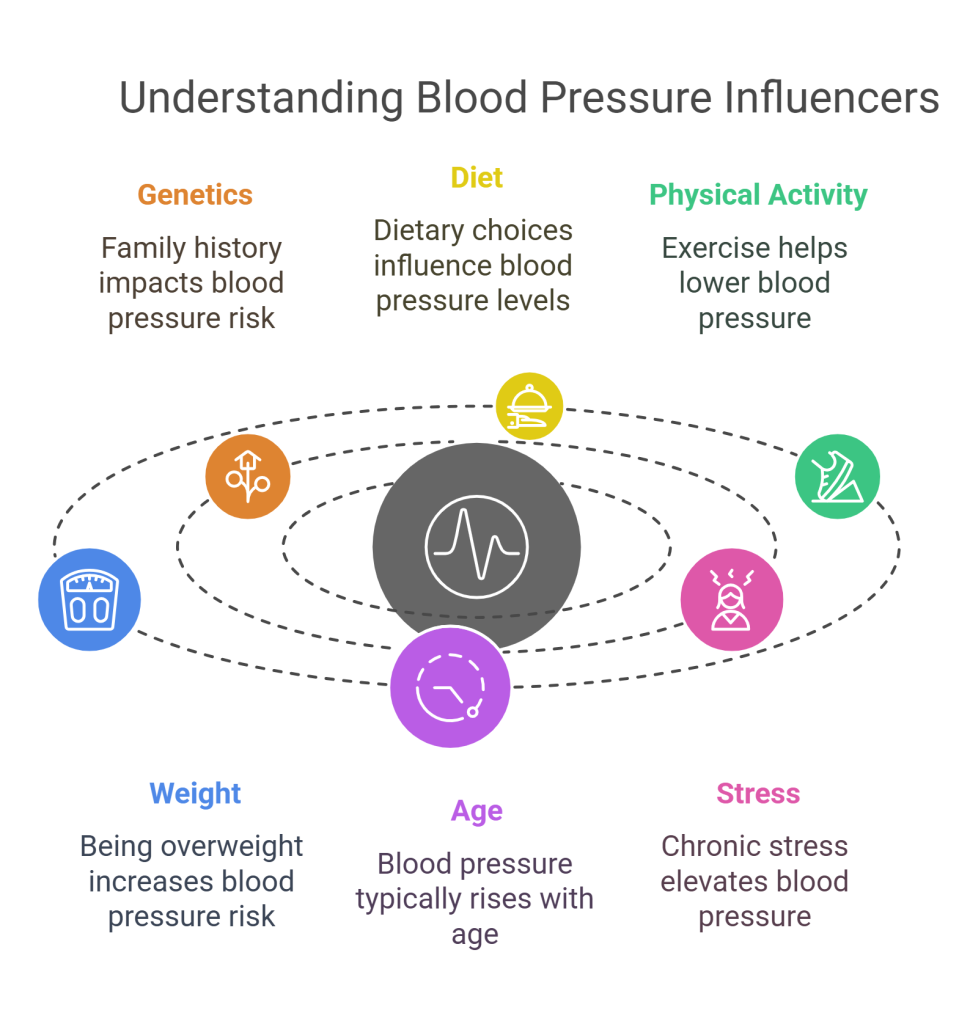
Several factors can influence your blood pressure, both in the short term and long term:
- Genetics: Family history can affect your likelihood of developing high blood pressure.
- Diet: High salt intake, low potassium, and high fat can raise blood pressure.
- Physical activity: Regular exercise helps lower blood pressure.
- Weight: Being overweight or obese can increase your risk.
- Age: Blood pressure typically increases with age.
- Stress: Chronic stress can contribute to elevated blood pressure.
Health Risks Associated with High and Low Blood Pressure
High blood pressure, or hypertension, can lead to severe health complications if not managed, including heart attack, stroke, kidney damage, and vision loss. Low blood pressure might cause dizziness, fainting, and in severe cases, shock.
Managing Blood Pressure
Managing blood pressure involves lifestyle changes and, if necessary, medication. Effective strategies include:
- Healthy eating: Following a diet rich in fruits, vegetables, lean proteins, and whole grains.
- Regular exercise: Engaging in moderate-intensity exercise for at least 150 minutes per week.
- Weight management: Maintaining a healthy weight can significantly affect blood pressure levels.
- Stress reduction: Incorporating relaxation techniques like meditation, yoga, or deep breathing into your routine.
- Medication: For some, lifestyle changes alone aren’t enough, and medications may be prescribed by a healthcare provider.
Conclusion
Understanding systolic and diastolic blood pressure is essential for maintaining cardiovascular health. Regular monitoring can help you make informed decisions about your health habits and medical care. For those seeking top-notch care, the best hospital in Ranchi offers comprehensive cardiovascular services to help manage blood pressure and prevent related health issues.
By keeping track of your blood pressure and working closely with your healthcare provider, you can take significant steps toward a healthier heart and a longer life.