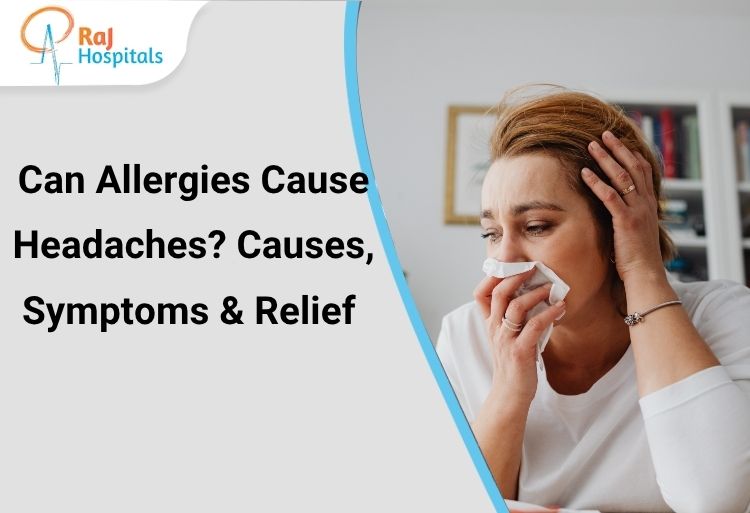
If you experience headaches during allergy season or after exposure to dust and pollen, you are not alone. Millions of people across India ask the same question — can allergies cause headaches? The answer is yes. Allergies trigger inflammatory responses in the body that lead to sinus congestion, pressure, and ultimately painful headaches. Understanding this connection is the first step toward effective relief.
How Do Allergies Cause Headaches?
When your immune system detects an allergen like pollen, dust mites, mold, or pet dander, it releases histamine and other chemicals to fight the perceived threat. These chemicals cause swelling and inflammation in the nasal passages and sinus cavities. As the sinuses become congested and blocked, pressure builds up inside the skull, resulting in a dull, throbbing headache. This is the primary mechanism by which allergies cause headaches in most people.
The trigeminal nerve, which supplies sensation to the face and head, becomes irritated by this inflammation and amplifies the pain signals. People with a history of chronic headaches and migraines are especially vulnerable to allergy-triggered episodes.
Types of Headaches Caused by Allergies
Not all allergy-related headaches feel the same. There are two main types you should be aware of:
1. Sinus Headaches
Sinus headaches are the most common type linked to allergies. The pain is felt as deep pressure around the forehead, cheeks, and behind the eyes. The discomfort typically worsens when you bend forward or lie down. These headaches are often accompanied by a blocked or runny nose, facial tenderness, and a feeling of fullness in the ears.
2. Allergy-Triggered Migraines
Allergies can also trigger full migraine attacks in susceptible individuals. Research shows that people with allergic rhinitis are significantly more likely to develop migraines. The difference between migraine and headache lies in severity — migraines involve intense throbbing pain, usually on one side, along with nausea, vomiting, and extreme sensitivity to light and sound.
Common Symptoms of Allergy Headaches
Recognizing allergy headaches is important for getting the right treatment. Key symptoms include:
- Dull, constant pressure in the forehead, temples, or behind the eyes
- Pain that worsens with head movement or bending forward
- Nasal congestion, runny nose, or postnasal drip
- Itchy, watery, or red eyes
- Sneezing and scratchy throat
- Fatigue and reduced concentration
- Symptoms that worsen during pollen season or when allergen exposure increases
If your headache comes with these accompanying nasal and eye symptoms, allergies are very likely the cause.
Common Allergens That Trigger Headaches in India
India’s diverse climate means allergy triggers vary by region and season. The most common allergens that cause headaches include tree and grass pollen (especially during February to May), dust mites present in bedding and carpets, mold spores during the monsoon season, pet dander from cats and dogs, and air pollutants in urban areas like Delhi, Mumbai, and Bengaluru. People living in high-pollution cities are at a greater risk because pollution worsens allergic inflammation and increases eye headache and sinus pressure.
Treatment and Relief for Allergy Headaches
Managing allergy headaches involves treating both the allergy and the headache pain. Here are the most effective approaches:
Medications
Antihistamines such as cetirizine and loratadine reduce histamine response and help clear nasal passages, which relieves the pressure causing the headache. Nasal corticosteroid sprays like fluticasone are highly effective for reducing sinus inflammation. Decongestants provide short-term sinus relief. For the headache itself, ibuprofen or paracetamol can provide symptomatic relief.
Allergen Avoidance
The best long-term strategy is to reduce allergen exposure. Stay indoors during peak pollen hours (early morning and evening). Use HEPA air filters at home. Wash bedsheets and pillowcases in hot water weekly. Keep windows closed during high-pollen days and wear a mask if you must go outside.
Immunotherapy
For people with persistent and severe allergy headaches, allergy immunotherapy (allergy shots or sublingual drops) can reprogram the immune system to tolerate allergens over time. This is one of the most effective long-term headache treatment options for allergy sufferers.
Prevention Tips for Allergy Headaches
Preventing allergy headaches starts with controlling your environment and building healthy daily habits. Track local pollen counts through weather apps and stay indoors when levels are high. Shower and change clothes after returning from outdoors. Keep indoor humidity below 50% to prevent mold growth. Stay well-hydrated, as dehydration worsens headaches. Get regular sleep, since sleep deprivation amplifies both allergy symptoms and headache sensitivity.
When Should You See a Doctor?
You should consult a healthcare professional if your headaches occur more than twice a week, if over-the-counter medications are not providing relief, if you experience severe pain with fever or stiff neck, or if your headaches are affecting your daily work and quality of life. A doctor can perform allergy testing to identify your specific triggers and create a personalized treatment plan. If you also experience jaw pain or toothache along with your headache, it may indicate a different underlying cause that needs evaluation.
Book Your Headache Consultation at Raj Hospitals
Are allergy headaches disrupting your daily life? Our experienced specialists at Raj Hospitals are here to help. We offer comprehensive allergy testing, diagnosis, and personalized treatment plans tailored to your needs.
Book Your Consultation TodayConclusion
So, can allergies cause headaches? Absolutely — and it is more common than most people realize. From sinus headaches caused by congestion to allergy-triggered migraines, the link between allergies and head pain is well established. By identifying your triggers, using the right medications, and making smart lifestyle adjustments, you can significantly reduce the frequency and severity of allergy headaches. If you have been struggling with recurring headaches during allergy season, do not ignore it — speak to a specialist and take control of your health today.