


 Cardiology
  Critical Care
  Emergency
  Gastroenterology
  Minimal Access Surgery
  Nephrology
  Neuro & Spine Surgery
  Neurology
  Oncology (Cancer Care)
  Orthopaedics & Joint Replacement
  Pulmonology
  Urology
  Aesthetic & Reconstructive Surgery
  Dental
  Dermatology
  ENT
ENT  Eye Care
  Haematology
  Internal Medicine
  Nutrition & Dietetics
  Obstetrics & Gynaecology
  Pediatrics & Neonatology
  Physiotherapy & Rehabilitation
  Psychiatry & Mental Health
  Radiology
  FNAC, Biopsy, Blood & Laboratory Investigations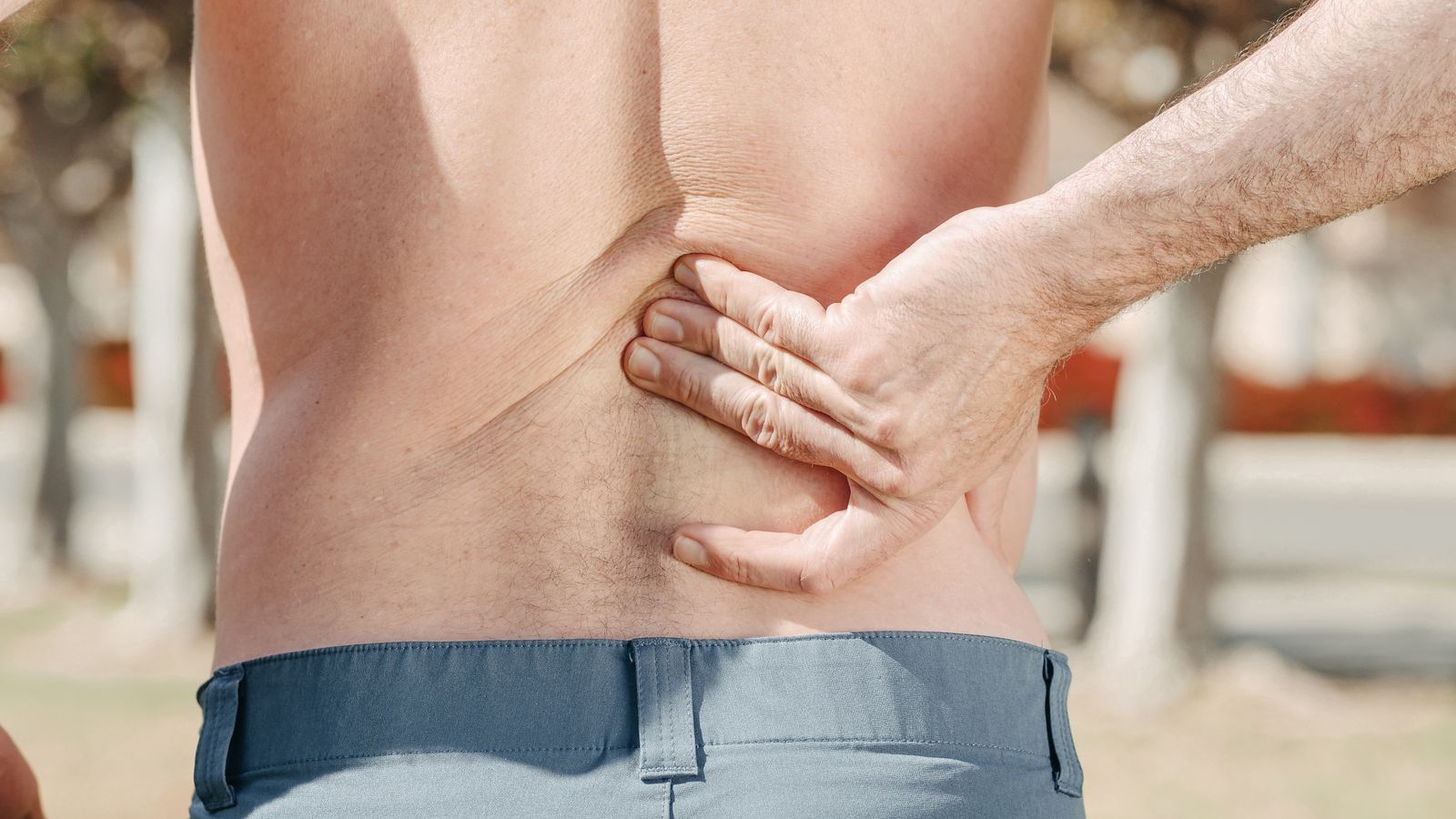
Back Pain: When It Needs an MRI, and When It Needs Rest
Two patients walk into the spine clinic in the same week. The first has had severe lower back pain for eight days after lifting a water drum, cannot sit comfortably, and is convinced something is torn. The second has had a dull backache for three months, mentions almost in passing that his right foot has started catching on steps, and thinks he is simply getting older. The first will almost certainly be fine without any scan. The second needs an MRI this week. Pain severity is a poor guide to seriousness in the spine, and that mismatch is the single most useful thing to understand about back pain and when to get an MRI.
Why Most Back Pain Genuinely Resolves on Its Own
The lower spine is a stack of vertebrae separated by discs, held together by ligaments and controlled by large muscle groups. Most back pain is mechanical: a muscle strain, an irritated facet joint, or a disc under strain. These tissues have good blood supply and heal, which is why the natural history of simple back pain is genuinely favourable. The majority of episodes improve substantially within two to six weeks whatever anyone does.
Two persistent myths are worth dismantling here, because both actively slow recovery.
Myth one: rest in bed until it settles. This was standard advice decades ago and has since been shown to make things worse. Muscles weaken quickly, joints stiffen, and the nervous system becomes more pain-sensitive with immobility. Current guidance is to rest a day or two at most if the pain is severe, then return to gentle movement and ordinary activity as far as comfort allows. Walking is usually the best starting point.
Myth two: a scan will tell me what is wrong. This one is more expensive. Disc bulges, degenerative changes and mild herniations are found routinely on MRI scans of people with no back pain at all, and they become steadily more common with age. Scanning simple back pain early therefore produces a report full of alarming words describing changes that were probably there last year and are not causing the symptoms. Patients then become convinced their spine is damaged, move less, and do worse. This is well documented, and it is why responsible clinicians resist scanning without an indication.
None of this means back pain should be ignored. It means the first step is a proper history and examination, not a scan. Plenty of back pain also turns out not to be spinal at all: our guides on gas-related back pain and on kidney stone versus kidney infection pain cover two of the commonest non-spinal causes we see in Ranchi.
Red Flags That Change the Picture Entirely
These are the criteria clinicians actually use. They are specific, and they matter far more than a pain score.
- Difficulty passing urine, or loss of bladder or bowel control
- Numbness in the saddle area — around the genitals, between the legs and the inner thighs, including numbness noticed while wiping
- Rapidly worsening weakness in both legs
- Severe back pain after a significant fall or road accident
These can indicate cauda equina syndrome or an unstable spinal injury. Cauda equina is a surgical emergency in which delay of even hours can cause permanent loss of bladder, bowel and sexual function. It is uncommon, but it is the one thing nobody should ever watch at home. Our 24x7 emergency department assesses these immediately.
See a doctor this week
- Progressive weakness in a leg or foot — a foot that drags or catches on steps, difficulty standing on tiptoe or on the heel
- Numbness or tingling spreading down the leg, especially if it is expanding
- Leg pain worse than back pain, following a clear line down the leg below the knee
- Pain not improving after six weeks of proper conservative treatment
Suggests a cause other than mechanical strain
- Fever with back pain, or a recent infection — possible spinal infection
- Unexplained weight loss, or any history of cancer
- Constant pain that is worse at night or wakes you from sleep, unrelieved by position change
- Pain after minor injury in someone with osteoporosis, or an older patient — possible compression fracture, which is why bone density screening matters
- Age under 20 or over 55 at first onset
- Long-term steroid use, or a suppressed immune system
Note what is not on these lists: severity. Excruciating pain that improves day by day, with no neurological symptoms and no systemic features, is usually a muscular or discogenic episode that will settle. Conversely, the moderate three-month ache with a foot that catches is the one that needs imaging. Patients consistently get this backwards, and so occasionally do clinicians in a hurry.
What an MRI Actually Shows That an X-Ray Does Not
Patients frequently arrive holding an X-ray and asking why it did not show the slipped disc. The answer is that it never could.
X-ray shows bone
- Fractures and collapsed vertebrae
- Alignment, curvature and slippage of one vertebra on another
- Bone spurs and narrowed disc spaces, which are indirect signs only
- Quick, inexpensive and widely available
- Cannot show discs, nerves, the spinal cord, ligaments or muscle
MRI shows soft tissue
- The discs themselves, and whether one is bulging, herniated or extruded
- The spinal cord and each nerve root, and whether anything is compressing them
- Spinal canal narrowing, called stenosis
- Infection, inflammation and tumour, often before bone changes appear
- Ligaments and muscle
- Uses a magnetic field, so no radiation
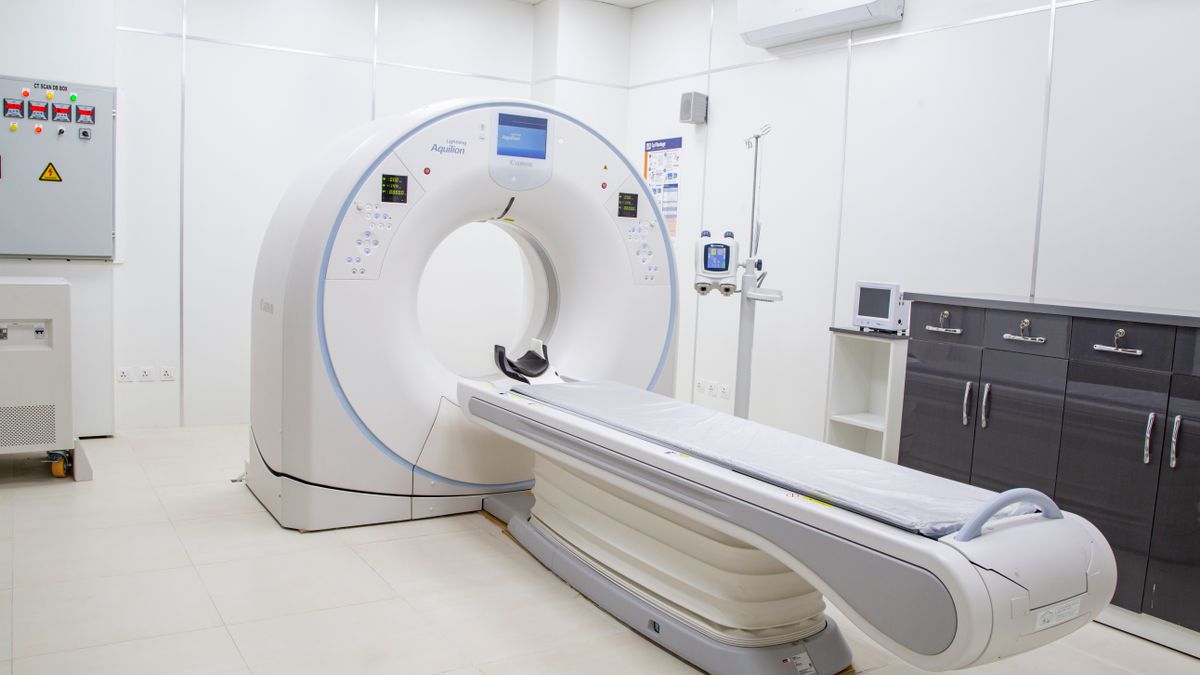
What the scan is like. You lie on a table that slides into a tube. It takes roughly twenty to forty minutes for a lumbar spine study, it is painless, and the main difficulties are that it is noisy and enclosed. Headphones or earplugs are provided. Tell the team beforehand if you are claustrophobic, since that can be managed. Crucially, you must declare any pacemaker, cochlear implant, metal implant, aneurysm clip or metallic fragment in the eye, because the magnetic field makes some of these unsafe. Our radiology department screens for all of this before the scan.
The report will contain frightening words. Desiccation, bulge, annular tear, facet arthropathy, modic changes. Most of these describe age-related change that is present in large numbers of people with no symptoms whatsoever. A finding matters only when it matches the examination: the nerve that is compressed on the scan should be the nerve supplying the area that is numb or weak. When they do not match, the finding is usually incidental. Our team spends a considerable share of consultation time explaining exactly this.
Conservative Treatment: What Gets Tried First, and Why It Works
The large majority of patients with back pain, including many with a genuine disc herniation causing sciatica, recover without an operation. Herniated disc material often shrinks on its own over weeks to months. That is the reason conservative treatment is given a proper trial rather than being a delaying tactic.
- Stay active. Not bed rest. Gentle walking, ordinary activity within comfort, and avoiding long unbroken periods of sitting. This is one of the best-evidenced measures available.
- Structured physiotherapy. Core stability and gluteal strengthening, hamstring flexibility, posture correction and a graded return to activity. Our physiotherapy and rehabilitation team handles the exercise programme, which matters more than any passive treatment.
- Pain relief, used to enable movement. Paracetamol, with short courses of anti-inflammatory medication where safe. Anti-inflammatories are not suitable for everyone, particularly those with kidney disease, ulcer history or on blood thinners, so ask before self-medicating. Specific medication for nerve pain may be added where nerve pain is confirmed.
- Heat or ice. Simple, cheap and genuinely helpful for muscle spasm. Use whichever gives you more relief.
- Address the load on the spine. Weight management, workstation setup, lifting technique using the legs rather than the back, and not sleeping on an excessively soft mattress. Our guide on neck pain covers the same principles for the upper spine, and cervical pain symptoms for related nerve problems in the neck.
- Image-guided steroid injection, for persistent nerve root pain that is not settling. This delivers medication precisely around the inflamed nerve and can break a pain cycle enough to let physiotherapy work.
- Treat contributing conditions. Vitamin D deficiency and poorly controlled diabetes, which causes its own nerve damage, both worsen and mimic spinal symptoms.
A word on traction, spinal manipulation by untrained hands, and aggressive massage during acute nerve pain. These are widely available and occasionally harmful, particularly when there is genuine nerve compression or undiagnosed osteoporosis. If you want manual therapy, get the diagnosis first.
When Neuro-Spine Surgery Becomes the Right Conversation
Surgery is not a last resort in the sense of being reserved until everything is unbearable. It is a targeted solution to specific problems, and it works best when there is a clear structural cause matching clear symptoms.
Surgery is urgent for: cauda equina syndrome; spinal cord compression with neurological deficit; spinal infection causing neurological signs; an unstable fracture; and a tumour compressing the cord. These are managed as emergencies by our neuro-spine surgery service, with support from critical care where needed. Related conditions we treat are covered on our spinal cord injury and spinal cord tumour pages.
Surgery becomes a reasonable planned option when:
- Leg pain from a confirmed nerve compression has not improved after six to twelve weeks of genuine conservative treatment, and the MRI matches the examination.
- There is progressive weakness in a specific muscle group, such as a foot drop, which does not recover.
- Spinal canal narrowing severely limits walking distance — the pattern where someone can only walk a hundred metres before leg pain forces them to stop and bend forward, then can continue.
- There is instability where one vertebra is slipping on another and causing mechanical pain and nerve symptoms.
One honest caveat that patients deserve before consenting to anything: spine surgery is generally far more reliable for leg pain caused by nerve compression than for back pain alone. A microdiscectomy for sciatica with a matching MRI has a good record. An operation for diffuse back pain with degenerative changes and no clear compression has a much less predictable outcome. Any surgeon offering an operation should be able to tell you exactly which of your symptoms they expect to improve and which they do not. If that distinction is not made clearly, ask for it. Related neurological conditions that can mimic spinal pain are covered on our back pain and sciatica treatment page.
Back pain with leg weakness or numbness? Get it assessed.
Raj Hospitals, Bariatu Road, Ranchi offers spine assessment with in-house MRI and CT imaging, neuro-spine surgeons, physiotherapy and 24x7 emergency cover for cauda equina and spinal injury.
Frequently Asked Questions
When should back pain be investigated with an MRI?
When there are red-flag features rather than simply because pain is severe: progressive leg or foot weakness, saddle numbness, new bladder or bowel difficulty, unexplained weight loss or fever, a cancer history, constant pain worse at night, pain after significant injury or in osteoporosis, and leg pain not improving after about six weeks of proper conservative treatment. Pain severity alone is a poor guide.
How long should back pain last before I worry?
Most simple episodes improve substantially within two to six weeks, and the majority settle without imaging or specialist input. Pain persisting beyond six weeks despite appropriate treatment, or progressively worsening rather than easing, deserves review. Any red-flag symptom needs assessment immediately regardless of duration.
What are the emergency red flags for back pain?
Difficulty passing urine or loss of bladder or bowel control, numbness in the saddle area around the genitals and inner thighs, rapidly worsening weakness in both legs, or severe pain after a significant fall or accident. These can indicate cauda equina syndrome or an unstable spinal injury. Cauda equina is a surgical emergency where a delay of hours can cause permanent loss of bladder and sexual function.
What does an MRI show that an X-ray does not?
An X-ray shows bone: fractures, alignment, bone spurs and narrowed disc spaces. It cannot show the structures that cause nerve symptoms. An MRI uses a magnetic field rather than radiation and shows soft tissue in detail, including the discs and whether one is herniated, the spinal cord and nerve roots and whether they are compressed, ligaments, muscles, and changes from infection or tumour.
Can an MRI show something that is not causing my pain?
Yes, and this matters. Disc bulges, degenerative changes and mild herniations are frequently found in people with no back pain at all, and become more common with age. Treating a scan finding rather than the patient leads to unnecessary surgery. This is why doctors match imaging to the clinical examination, and why a scan without proper examination first can mislead more than it helps.
Is bed rest good for back pain?
No. Prolonged bed rest was standard decades ago and has since been shown to slow recovery, because muscles weaken, joints stiffen and pain sensitivity rises. Rest a day or two at most if pain is severe, then return to gentle movement and normal activity as far as pain allows. Staying active within comfort is one of the best-evidenced treatments for simple back pain.
What conservative treatments are tried before surgery?
Staying active, structured physiotherapy for core strength and posture, simple analgesia with short anti-inflammatory courses where safe, heat or ice, weight management, workstation and lifting adjustments, and medication for nerve pain in selected cases. For persistent nerve root pain, an image-guided steroid injection can help. Most patients improve substantially and never need an operation.
When is spine surgery the right conversation?
Urgently for cauda equina, cord compression, spinal infection with deficit, unstable fracture, or a tumour compressing the cord. As a planned option when leg pain from confirmed nerve compression has not improved after six to twelve weeks of proper treatment, when weakness is progressive, or when canal narrowing severely limits walking. Surgery is far more reliable for nerve-compression leg pain than for back pain alone.
Is sciatica always caused by a slipped disc?
No. A herniated disc pressing on a nerve root is the commonest cause, but sciatica-like leg pain can also come from spinal canal narrowing, facet joint arthritis, piriformis muscle irritation, or occasionally conditions outside the spine such as pelvic masses. Diabetic nerve damage can mimic it too. The pain pattern, neurological examination and imaging all need to agree before blaming a disc.
Related Spine and Nerve Guides
- Back pain and sciatica treatment in Ranchi — full treatment overview
- Neck pain — गर्दन में दर्द के कारण और इलाज
- Cervical pain symptoms — सर्वाइकल दर्द के लक्षण
- Gas-related back pain — when backache is not spinal
- Leg pain in Hindi — पैर में दर्द और नस की समस्या
- Bone density screening after 50 — the cause of many spinal fractures
- Spinal cord injury treatment in Ranchi
- Neuro and Spine Surgery at Raj Hospitals Ranchi
- Dr. Vivek Raj — Neurosciences and Neurosurgery, Raj Hospitals Ranchi
Last updated: September 2, 2026 · Medically reviewed by our consultant neurosurgeons and spine specialists · About Raj Hospitals
Medical disclaimer: This article is general education and cannot assess your individual back pain. If you have any red-flag symptom described above, particularly bladder or bowel change or saddle numbness, seek emergency care immediately rather than waiting for an appointment.